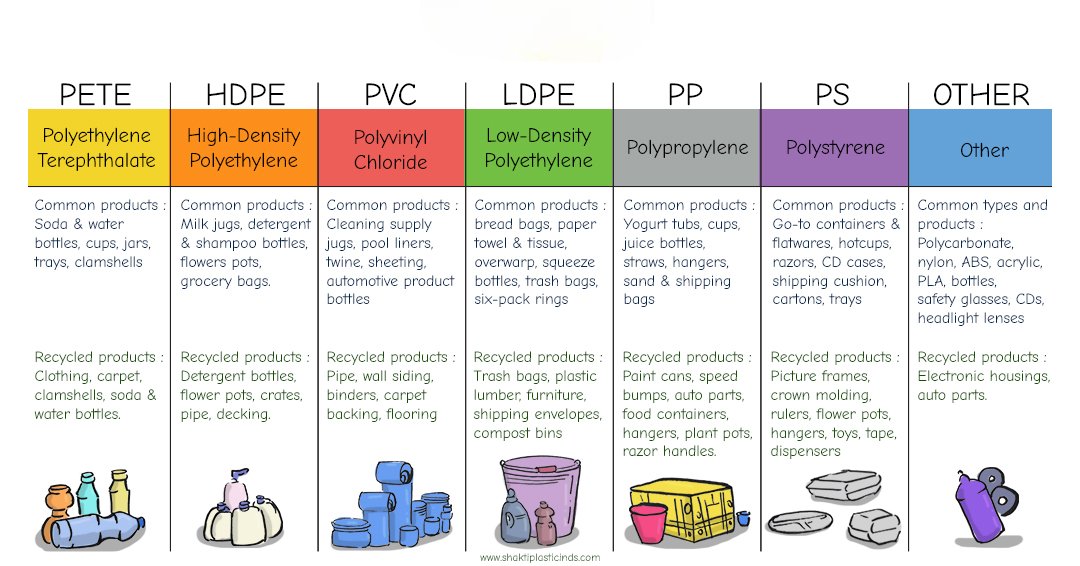
Plastic containers are widely used across various industries, including food, beverage, pharmaceuticals, household products, and cosmetics, due to their versatility, durability, and cost-effectiveness. Different types of plastics are selected based on their material properties, which influence factors like strength, chemical resistance, barrier properties, and cost. Below are the most commonly used plastics for manufacturing plastic containers and how their properties influence their applications:
1. Polyethylene Terephthalate (PET or PETE)
Properties:
- Clarity: PET is transparent, making it an ideal material for containers where visibility of the contents is important.
- Strength and Durability: PET is strong, lightweight, and resistant to impact, making it ideal for containers that need to be durable and able to withstand transportation.
- Barrier Properties: PET has good resistance to moisture, gases, and chemicals, which helps preserve the contents of the container (important for carbonated drinks and food products).
- Recyclability: PET is one of the most recyclable plastics, making it a popular choice for companies focused on sustainability.
Applications:
- Beverages: PET is commonly used for soft drink bottles, juice containers, and water bottles.
- Food Packaging: PET is also used for jars, snack containers, and ready-to-eat meal containers.
- Cosmetics: PET containers are used for packaging shampoos, conditioners, and cosmetic products.
Advantages:
- Clear appearance helps with brand visibility and consumer appeal.
- Strong and durable, suitable for carbonated beverages and other liquid products.
- Highly recyclable.
2. High-Density Polyethylene (HDPE)
Properties:
- Strength and Rigidity: HDPE is a strong, rigid material with high impact resistance, making it ideal for products that require durability.
- Chemical Resistance: HDPE is highly resistant to a wide range of chemicals, oils, and solvents, making it ideal for containers used in industrial or chemical applications.
- Low Moisture Absorption: It has low permeability to moisture, which makes it effective for packaging moisture-sensitive products.
- Recyclability: HDPE is recyclable and is often made into products like plastic lumber and recycling bins.
Applications:
- Milk Jugs and Water Containers: HDPE is commonly used for milk containers, water jugs, and juice bottles.
- Household Products: Used for packaging cleaning products, detergents, and personal care items.
- Industrial and Chemical Packaging: HDPE is used in chemical containers, drums, and fuel tanks due to its chemical resistance.
Advantages:
- Excellent strength-to-weight ratio.
- Highly resistant to impact, chemicals, and moisture.
- Cost-effective and easy to process, making it suitable for a wide range of products.
3. Polypropylene (PP)
Properties:
- Flexibility and Toughness: PP is flexible, yet has high tensile strength, which makes it suitable for containers that need to withstand frequent handling or slight deformation.
- Heat Resistance: PP has a high melting point, which makes it ideal for containers that will be exposed to higher temperatures, such as for hot-fill applications.
- Chemical Resistance: Like HDPE, PP is highly resistant to chemicals and solvents, making it suitable for a wide range of industrial and food applications.
- Transparency: PP can be made both opaque or clear, depending on the application.
Applications:
- Food Packaging: PP is used for packaging dairy products (e.g., yogurt containers, margarine tubs), snack containers, and take-out containers.
- Pharmaceutical Containers: PP is commonly used for pill bottles and medical packaging due to its heat resistance and chemical compatibility.
- Household Items: Used for storage bins, cleaning product containers, and cosmetic packaging.
Advantages:
- Good impact resistance and flexibility, suitable for products that are subjected to stress during handling.
- High heat resistance makes it ideal for hot-fill products.
- Cost-effective and versatile for many applications.
4. Polyvinyl Chloride (PVC)
Properties:
- Versatility: PVC can be made either rigid or flexible. Rigid PVC is a hard, durable material used for containers, while flexible PVC is used for products like blister packaging.
- Chemical Resistance: Rigid PVC is resistant to chemicals, oils, and acids, which makes it useful for food packaging and medical applications.
- Lightweight: PVC is lightweight and cost-effective but can be prone to environmental stress cracking under certain conditions.
Applications:
- Food Packaging: Used for meat trays, cling films, and bottle caps.
- Medical Packaging: PVC is often used for medical vials, IV containers, and drug blister packs.
- Cosmetics: Used for cosmetic containers and personal care products.
Advantages:
- Low cost and widely available.
- Strong and durable for many applications.
- Offers good chemical resistance, making it suitable for certain types of food and chemical packaging.
5. Polystyrene (PS)
Properties:
- Brittleness: PS is a relatively brittle plastic that can break or crack under impact. However, it offers good clarity, which makes it useful for visual appeal in packaging.
- Lightweight: PS is lightweight and easy to mold, making it cost-effective for mass production of packaging.
- Low Barrier Properties: PS has poor barrier properties, which makes it less suitable for products that require long shelf life.
Applications:
- Disposable Containers: PS is used for single-use containers, such as food trays, coffee cups, and clamshell packaging.
- Clear Packaging: PS is used in clear containers for cosmetics, toys, and electronics packaging.
- Packaging for Dry Goods: It is used for products like spices, confectioneries, and snack packaging.
Advantages:
- Clear and aesthetically appealing, ideal for visual packaging.
- Low cost and easy to process, which makes it popular for disposable applications.
- Suitable for low-cost, single-use containers.
6. Polycarbonate (PC)
Properties:
- Strength and Transparency: Polycarbonate is known for its high strength, optical clarity, and impact resistance. It’s one of the strongest transparent plastics available.
- Heat Resistance: Polycarbonate has a relatively high melting point, making it suitable for hot-fill applications and products exposed to high temperatures.
- Chemical Sensitivity: While polycarbonate is durable, it can be sensitive to certain chemicals and may experience degradation over time with exposure to UV light.
Applications:
- Reusable Bottles: Polycarbonate is used for high-end reusable water bottles and food storage containers.
- Medical Packaging: PC is used for medical device containers, baby bottles, and drug vials.
- Consumer Electronics: Used in protective packaging for electronics and optical lenses.
Advantages:
- High clarity and strength make it suitable for products that require transparency and durability.
- Suitable for high-end and reusable products.
The selection of plastics for manufacturing bottle caps and plastic lids depends on several factors, including material strength, flexibility, heat resistance, and barrier properties. Commonly used plastics like PET, HDPE, and PP are favored for their durability, chemical resistance, and recyclability, while bioplastics and polycarbonate are increasingly used for eco-friendly and high-performance applications.