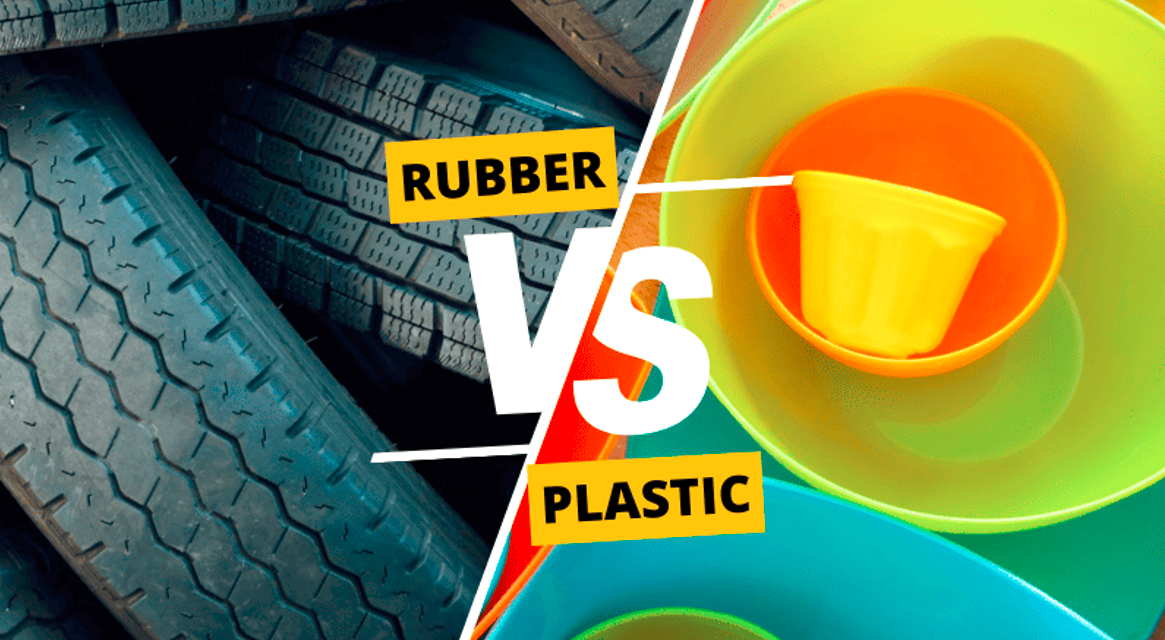
The manufacturing processes of synthetic rubber and synthetic plastics differ significantly in terms of the chemistry, processing methods, and the properties of the final products. While both are polymers (made from monomers), synthetic rubber and plastics serve different purposes and require distinct manufacturing techniques. Below is a comparison of the manufacturing processes for each:
1. Synthetic Rubber Manufacturing Process
Synthetic rubber is primarily produced through polymerization of monomers (small molecules) using various methods, including addition polymerization and condensation polymerization. The production process for synthetic rubber focuses on creating materials with elastic properties that can return to their original shape after deformation.
Steps in Synthetic Rubber Manufacturing:
a) Monomer Selection:
- Monomers like butadiene, styrene, and isoprene are the most common building blocks used in synthetic rubber production. For example, styrene-butadiene rubber (SBR) is made from styrene and butadiene, while polybutadiene rubber (BR) is made from butadiene.
b) Polymerization:
- The monomers undergo addition polymerization in the presence of a catalyst (e.g., radicals, zinc oxide, or organometallic catalysts) to form long-chain polymers.
- In solution polymerization, the monomers are dissolved in a solvent, which allows for better control of the polymer’s molecular weight and distribution.
- In emulsion polymerization, the monomers are polymerized in an aqueous medium with surfactants, allowing for the production of latex rubbers.
c) Crosslinking (Vulcanization):
- After the polymerization process, the rubber undergoes a process called vulcanization. This step involves the addition of sulfur (or other crosslinking agents) to form crosslinks between polymer chains. This is what gives the rubber its elasticity and durability.
- Vulcanization makes the rubber more heat-resistant, flexible, and resistant to wear and aging.
d) Compounding:
- During the compounding stage, various additives such as carbon black, plasticizers, antioxidants, and processing oils are mixed with the rubber to enhance its properties (e.g., strength, tensile properties, weather resistance).
e) Shaping and Curing:
- The rubber is shaped into desired forms, such as tires, seals, and gaskets, through molding, extrusion, or calendaring.
- The final curing (vulcanization) takes place at elevated temperatures, solidifying the rubber into its final form.
Synthetic Rubber Characteristics:
- Elasticity: Ability to stretch and return to the original shape.
- Durability: Resilient to wear, UV radiation, and harsh weather conditions.
- Flexibility: Can be molded into a wide variety of shapes.
- Heat and Chemical Resistance: Depending on the type of rubber, it can be designed to withstand exposure to heat, oils, and chemicals.
2. Synthetic Plastics Manufacturing Process
Synthetic plastics, on the other hand, are produced through polymerization as well, but their properties and applications differ from synthetic rubber. Plastics are typically more rigid and durable than rubber and are used in products that require high structural integrity, such as packaging, automotive parts, electronics, and medical devices.
Steps in Synthetic Plastics Manufacturing:
a) Monomer Selection:
- Monomers like ethylene, propylene, styrene, vinyl chloride, and terephthalic acid are commonly used in synthetic plastic production.
- For example, polyethylene (PE) is made from ethylene, polypropylene (PP) from propylene, and polystyrene (PS) from styrene.
b) Polymerization:
- Addition Polymerization: Most synthetic plastics, such as PE, PP, and PVC, are made through addition polymerization (also known as chain-growth polymerization). The monomer units, which contain double bonds, react with free radicals or initiators to form long polymer chains.
- Condensation Polymerization: Some plastics, like nylon, polyesters (e.g., PET), and polyurethanes, are made through condensation polymerization. In this process, the polymerization occurs through the elimination of a small molecule, such as water or methanol, as the polymer chains form.
c) Processing Methods:
- Injection Molding: The polymer is heated to a molten state and injected into a mold to form the desired shape. This is used for manufacturing containers, automotive parts, and consumer goods.
- Extrusion: The polymer is melted and forced through a die to create continuous shapes, such as pipes, films, and sheets.
- Blow Molding: Used to produce hollow parts such as bottles and containers by inflating a tube of molten plastic inside a mold.
- Compression Molding: Involves placing polymer powder or pre-formed polymer into a heated mold, where pressure is applied to shape the final product.
d) Additives and Fillers:
- During compounding, various additives (e.g., plasticizers, stabilizers, colorants, flame retardants) are mixed into the polymer to enhance its performance or appearance.
- Reinforcements like glass fibers or carbon fibers may also be added to enhance the mechanical properties of plastics, especially for engineering applications.
e) Cooling and Solidifying:
- Once shaped, the plastic is cooled and solidified to set its final form. The cooling rate and molding conditions significantly affect the crystallinity and mechanical properties of the polymer.
Synthetic Plastics Characteristics:
- Rigid or Flexible: Depending on the polymer type and processing method, plastics can be either rigid (e.g., polystyrene) or flexible (e.g., polyethylene).
- Strength and Durability: Plastics can be engineered to have high tensile strength and durability for demanding applications, such as automotive and construction.
- Lightweight: Plastics are generally much lighter than metals and ceramics, making them ideal for applications requiring lightweight materials.
- Thermal and Chemical Resistance: Many plastics are designed to be heat-resistant and chemically inert, making them suitable for industries such as electronics, medical, and food packaging.
Conclusion
The manufacturing processes of synthetic rubber and synthetic plastics differ primarily in their polymerization techniques, the presence or absence of crosslinking, and the final properties of the materials. Synthetic rubber is designed for elasticity and flexibility, requiring a vulcanization step to achieve its characteristic properties, whereas synthetic plastics are generally used for more rigid applications and processed through methods like injection molding and extrusion. Understanding these differences is key to selecting the appropriate material for each application, whether it’s for automotive components, packaging, medical devices, or consumer goods.
Hashtags
#SyntheticRubber #RubberManufacturing #PlasticManufacturing #RubberVsPlastic #RubberProcessing #PolymerizationProcess #RubberProduction #ThermosetRubber #ThermoplasticRubber #SyntheticPolymers #RubberVulcanization #PlasticMolding #RubberMolding #PlasticsVsRubber #RubberProcessingVsPlasticProcessing #PolymerScience #MaterialInnovation