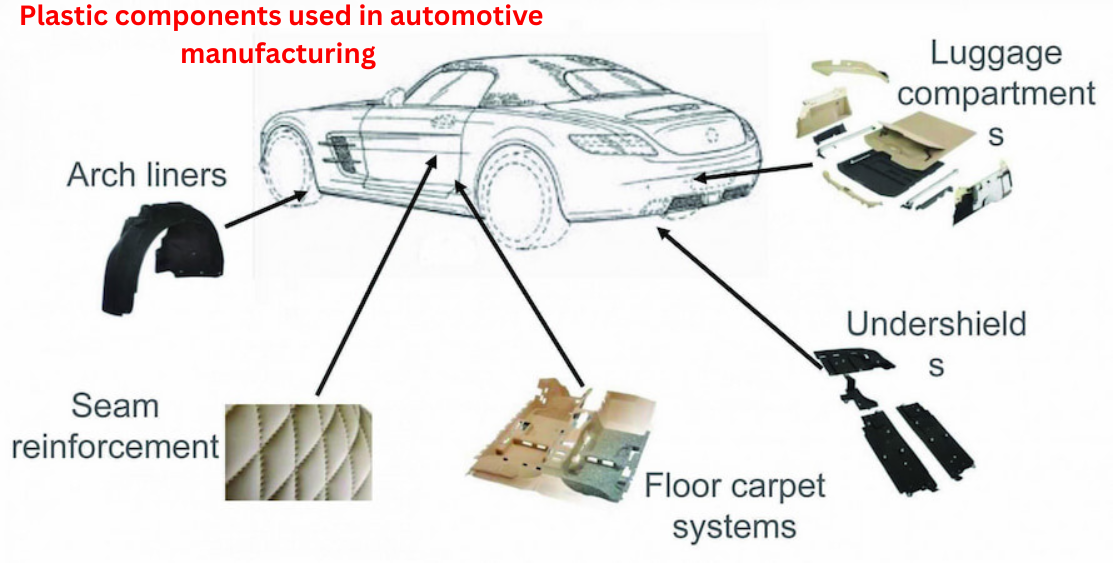
In automotive manufacturing, plastics play a crucial role in reducing vehicle weight, improving fuel efficiency, and enhancing performance and safety. Various types of plastic components are used throughout the vehicle, from the exterior body parts to interior components and under-the-hood applications. Below are some of the most common types of plastic components used in automotive manufacturing:
1. Polypropylene (PP)
- Applications:
- Bumpers: Polypropylene is commonly used in bumpers due to its impact resistance and ability to absorb energy in the event of a collision.
- Interior Trim: Used in door panels, dashboard components, and console covers because of its durability, lightweight properties, and scratch resistance.
- Fender Linings: Often used for the inner lining of fenders as it offers resistance to dirt and chemicals.
- Advantages: Lightweight, impact-resistant, chemically resistant, and has a relatively low cost compared to other plastics.
2. Acrylonitrile Butadiene Styrene (ABS)
- Applications:
- Interior Parts: Commonly used for dashboards, center consoles, door panels, and instrument panels because of its toughness, ability to be molded, and aesthetic finish.
- Exterior Trim: ABS is also used in grills, wheel covers, and body cladding.
- Advantages: Known for its high strength, good impact resistance, and ease of molding. It also has a smooth finish that can be easily painted or coated for aesthetic purposes.
3. Polycarbonate (PC)
- Applications:
- Headlights and Taillights: Polycarbonate is widely used for automotive lighting components due to its transparency, high impact resistance, and lightweight nature.
- Windows and Roofs: Some roof panels and windows (especially in electric vehicles) are made of polycarbonate, which is a lighter alternative to glass.
- Advantages: High impact resistance, optical clarity, and lightweight, but it is more expensive than some other plastics. It is also thermally stable and has good weathering resistance.
4. Polyurethane (PU)
- Applications:
- Seating: Polyurethane foam is commonly used in seats for comfort and support in both passenger and commercial vehicles.
- Exterior Parts: Used for bumpers, grilles, and side moldings due to its high elasticity and impact resistance.
- Soundproofing: Polyurethane foams are also used in insulation for noise reduction and vibration dampening.
- Advantages: High flexibility, excellent cushioning properties, and good durability under a wide range of conditions. It can also be molded into complex shapes for a variety of uses.
5. Nylon (Polyamide)
- Applications:
- Under-the-Hood Components: Nylon is commonly used for engine components, fuel systems, brake lines, and battery components because of its strength and heat resistance.
- Wire Insulation: Used for wires and cables in automotive electrical systems.
- Advantages: High strength, good heat resistance, chemical resistance, and excellent abrasion resistance. It is also lightweight and helps reduce vehicle weight, improving fuel efficiency.
6. Polyvinyl Chloride (PVC)
- Applications:
- Interior Components: Used in floor mats, door panels, upholstery (often combined with fabrics), and dashboards.
- Wiring Insulation: Polyvinyl chloride is used for the insulation of wires and cables due to its electrical insulation properties.
- Advantages: Cost-effective, durable, and easy to process. It also has good chemical resistance, fire resistance, and ease of cleaning, which is why it is commonly used in interior trim and upholstery.
7. High-Density Polyethylene (HDPE)
- Applications:
- Fuel Tanks: HDPE is commonly used for automotive fuel tanks because it is chemical resistant and lightweight.
- Bumpers and Guards: Used in some exterior parts like bumpers, skid plates, and side panels due to its impact resistance and durability.
- Underbody Parts: Often used for underbody shields, wiper motors, and windshield washers.
- Advantages: Lightweight, impact-resistant, durable, and has high chemical resistance, making it ideal for fuel systems and under-the-hood components.
8. Polystyrene (PS)
- Applications:
- Interior Components: Polystyrene is used in some dashboard components, trims, cup holders, and switch panels.
- Sound Insulation: Sometimes used in soundproofing and vibration damping materials inside the vehicle.
- Advantages: Cost-effective, lightweight, and easy to mold. Polystyrene is often used in parts that do not undergo extreme stress or require high strength.
9. Thermoplastic Elastomers (TPE)
- Applications:
- Seals and Gaskets: TPE is commonly used in the manufacturing of door seals, window seals, and gaskets due to its flexibility and weather resistance.
- Interior and Exterior Trim: Used for bumpers, dashboard components, and door handles.
- Advantages: Flexible, weather-resistant, and provides good elasticity. TPE combines the characteristics of rubber with the processability of plastics, making it ideal for sealing and cushioning applications.
10. Acrylonitrile Butadiene Styrene (ABS)
- Applications:
- Body Panels: ABS is commonly used for exterior parts like grilles, wheel covers, and side mirrors.
- Interior Trim: ABS is used in dashboard panels, instrument clusters, center consoles, and door panels.
- Advantages: High impact strength, good surface finish, and high toughness. ABS is widely used because of its moldability, ease of use in aesthetically pleasing components, and its ability to resist cracking under stress.