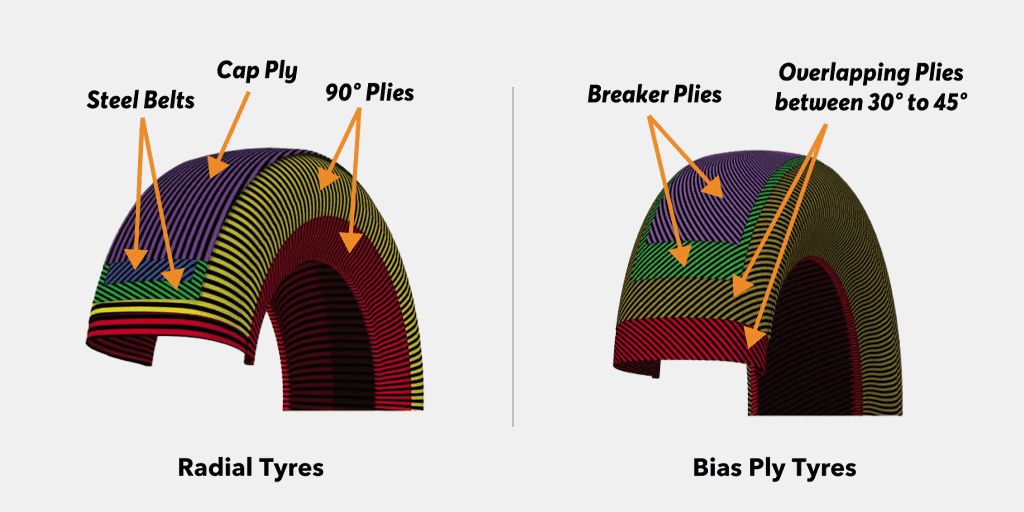
Radial and bias ply tires are two types of tire construction, each offering distinct characteristics in terms of performance, durability, and cost. The differences between these two tire types mainly lie in the arrangement of the cords (typically made of steel, polyester, or nylon) within the tire and how they affect various aspects of tire performance. Here’s a breakdown of the differences between radial and bias ply tires, as well as their typical applications:
1. Construction Differences
Radial Ply Tires
- Cord Arrangement: In radial tires, the tire’s reinforcing cords (or plies) are laid radially from the center of the tire, at a 90-degree angle to the direction of travel. This means the plies run perpendicular to the tread, allowing for a more flexible sidewall and stiffer tread area.
- Belt Layer: Radial tires typically have one or more steel belts running around the circumference of the tire under the tread. These belts help strengthen the tread area and provide additional durability.
- Sidewall Flexibility: The sidewalls of radial tires are more flexible compared to bias ply tires, which contributes to better comfort and handling.
Bias Ply Tires
- Cord Arrangement: In bias ply tires, the cords are arranged diagonally, typically at a 30-45 degree angle to the direction of travel. The cords cross each other in multiple layers, with each layer running in a different direction, creating a crisscross pattern.
- No Steel Belts: Bias ply tires usually lack the steel belts found in radial tires. Instead, they rely on the diagonal plies for strength.
- Stiffness and Durability: The sidewalls of bias ply tires are stiffer, providing a firmer ride but also making them less flexible compared to radial tires.
2. Performance Differences
Radial Ply Tires
- Traction: Radial tires offer superior traction due to their more flexible sidewalls and reinforced tread. The tread maintains better contact with the road, which improves handling, cornering, and braking performance.
- Durability: Radial tires tend to have longer tread life and better fuel efficiency due to their lower rolling resistance.
- Ride Comfort: Because of their flexible sidewalls, radial tires provide a smoother ride by absorbing road vibrations and shocks more effectively.
- Heat Dissipation: The construction of radial tires allows for better heat dissipation, which reduces the risk of overheating during high-speed driving.
Bias Ply Tires
- Traction: Bias ply tires typically provide less traction compared to radial tires due to their stiffer sidewalls and less efficient footprint on the road.
- Durability: While they tend to be more resistant to punctures and damage from rough terrain, they have a shorter lifespan in terms of tread wear compared to radial tires.
- Ride Comfort: The stiffer sidewalls of bias ply tires result in a rougher ride, especially on paved surfaces. However, they perform better on rough or uneven terrain.
- Heat Build-Up: Bias ply tires generate more heat during high-speed driving, leading to increased wear and potentially reduced durability over time.
3. Applications
Radial Ply Tires
- Passenger Vehicles: Radial tires are the most common type used on passenger cars, trucks, and SUVs due to their superior traction, fuel efficiency, comfort, and longer lifespan. They are ideal for highway driving and provide excellent handling at high speeds.
- Light Trucks and Vans: Radial tires are also used in light commercial vehicles and vans for their durability and fuel efficiency on paved roads.
- Performance and Racing Vehicles: High-performance and racing vehicles prefer radial tires for their superior grip, handling, and stability on both dry and wet surfaces.
- Heavy Trucks: Many heavy-duty trucks and long-haul vehicles use radial tires for their fuel efficiency and durability over long distances and on highways.
Bias Ply Tires
- Off-Road Vehicles: Bias ply tires are commonly used in off-road vehicles, agricultural equipment, construction vehicles, and trailers due to their superior puncture resistance and ability to handle rough terrain.
- Tractors and Farming Equipment: Bias ply tires are often used in tractors and other agricultural machinery, as they offer good traction on loose soil and rough surfaces. Their sidewall strength makes them ideal for working in rugged, uneven conditions.
- Motorcycles: Some motorcycles, particularly older models or certain off-road bikes, still use bias ply tires for their rugged durability and performance on rough or dirt roads.
- Vintage and Classic Cars: Older cars, especially vintage vehicles, may still use bias ply tires due to their historical accuracy and the design specifications of the original vehicles.
Radial ply tires are the preferred choice for passenger vehicles, light trucks, and performance applications because of their superior traction, fuel efficiency, comfort, and longevity. They excel on highway driving, where heat dissipation and low rolling resistance are essential.
Bias ply tires are better suited for off-road applications and rough terrain due to their puncture resistance and strength under stress, but they are generally not as efficient on highways or at high speeds.