Plastic injection molding is one of the most widely used manufacturing processes for producing plastic parts. It is highly efficient, cost-effective, and capable of delivering high-quality components with precision. When compared to other manufacturing processes such as CNC machining, 3D printing, blow molding, extrusion, and thermoforming, plastic injection molding offers several advantages. This article explores these advantages in detail.
1. High Efficiency and Fast Production
One of the biggest advantages of plastic injection molding is its ability to produce parts quickly. The process is highly automated, and once the mold is designed, thousands or even millions of identical parts can be made with minimal labor.
- Faster cycle times: The injection molding process takes seconds to minutes per part, which is much quicker than CNC machining or 3D printing.
- Mass production capability: It is ideal for large-scale manufacturing, making it more efficient than other methods like 3D printing, which is better suited for prototyping.
2. High Precision and Consistency
Plastic injection molding provides excellent precision and repeatability, making it a preferred choice for industries requiring tight tolerances and complex designs.
- Dimensional accuracy: The process can achieve tolerances as tight as ±0.005 inches, which is better than blow molding or thermoforming.
- Reproducibility: Since the mold determines the shape, every part produced is nearly identical, making it more consistent than CNC machining, which may vary slightly due to tool wear.
3. Cost-Effectiveness for Large Volumes
Although the initial tooling costs for injection molding can be high, the cost per part decreases significantly for large production runs.
- Lower per-unit cost: After the mold is made, the cost per part is much lower compared to CNC machining, which requires material removal, increasing waste and processing time.
- Reduced material waste: Unlike CNC machining, which removes material, injection molding uses only the amount of plastic required for the part.
4. Versatility in Material Selection
Plastic injection molding supports a wide variety of materials, including thermoplastics, thermosets, and elastomers, making it more versatile than some alternative methods.
- Multiple material options: Unlike 3D printing, which is often limited to specific materials, injection molding allows for flexible, rigid, and high-performance plastics.
- Custom properties: Manufacturers can select plastics with specific properties such as heat resistance, impact strength, or chemical resistance.
5. Complex Geometries and Detailed Features
Injection molding allows for intricate designs, thin walls, and complex geometries that are difficult to achieve with other manufacturing techniques.
- More intricate than CNC machining: Unlike CNC machining, which is limited by the cutting tool’s ability to reach certain areas, injection molding can produce complex internal features.
- Better than blow molding: Blow molding is mainly used for hollow parts like bottles, while injection molding is suitable for more detailed and varied components.
6. Minimal Post-Processing Requirements
Plastic injection molding produces parts with a smooth finish and does not require as much post-processing as CNC machining or 3D printing.
- Less finishing work: Unlike CNC machining, which may leave visible tool marks, injection molding produces smooth, polished surfaces.
- Color and texture customization: Pigments and additives can be added directly to the plastic, eliminating the need for painting or coating after production.
7. High Strength and Durability
Plastic injection molding allows for the use of reinforced materials, which can improve the strength and durability of the final product.
- Stronger than 3D-printed parts: 3D-printed parts are often weaker due to layer adhesion issues, while injection-molded parts are solid and uniform.
- Comparable to metal parts: With advanced polymers, injection-molded plastics can replace metal parts in industries like automotive and aerospace.
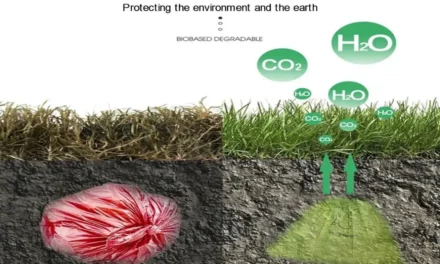
8. Environmental Benefits and Sustainability
Modern plastic injection molding processes focus on reducing waste and using recycled materials, making it more eco-friendly than some traditional methods.
- Less material waste than CNC machining: Machining removes excess material, whereas injection molding only uses what is needed.
- Recyclable materials: Many injection-molded plastics can be reprocessed and reused, contributing to sustainability efforts.
Conclusion
Plastic injection molding offers significant advantages over other manufacturing processes, especially for high-volume production. It is fast, precise, cost-effective, and capable of producing complex and durable parts with minimal waste. Compared to CNC machining, it generates less material waste; compared to 3D printing, it is more scalable; and compared to blow molding, it offers more design flexibility.
For industries that require mass production with consistency and efficiency, such as automotive, medical, consumer electronics, and packaging, plastic injection molding remains the preferred manufacturing method. As advancements continue, this process will become even more sustainable, versatile, and cost-efficient for future production needs.
Hashtags
#PlasticInjectionMolding #ManufacturingTech #InjectionMolding #ManufacturingProcess #IndustrialEngineering #PlasticsIndustry #ProductDesign #CostEffective #HighEfficiency #MassProduction #PrecisionMolding #DurableDesign #BetterThan3DPrinting #VsCNC #VsThermoforming #MoldingVsCasting #EcoFriendlyManufacturing #SustainablePlastics #RecycledMaterials #InnovativeManufacturing #CustomMolding #QualityAssurance #SupplyChainEfficiency #AdvancedManufacturing #EngineeringExcellence