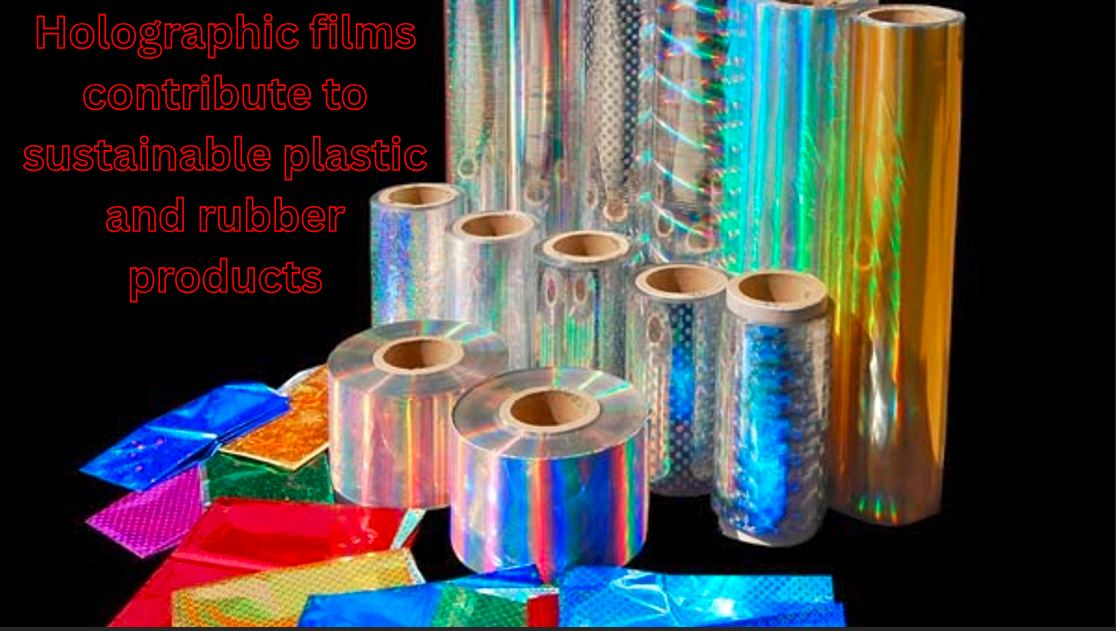
Holographic films contribute to sustainable plastic and rubber products by enhancing their aesthetic, functional, and environmental attributes while reducing reliance on non-renewable resources and minimizing waste. Here’s how holographic films support sustainability:
1. Lightweighting and Material Efficiency
- Enhanced Visual Appeal with Less Material:
- A thin holographic film layer can replace the need for additional printing, coatings, or decorative materials, reducing overall material use.
- Multi-Functionality:
- Holographic films can combine decorative, branding, and security features into a single layer, reducing the need for separate processes and materials.
2. Use of Eco-Friendly Materials
- Biodegradable Polymers:
- Holographic films can be made from sustainable polymers like polylactic acid (PLA) or polyhydroxyalkanoates (PHA), which decompose naturally under industrial composting conditions.
- Recyclable Substrates:
- Non-metallized holographic films can be produced on recyclable plastics like PET or BOPP, allowing for better integration into recycling systems.
- Bio-Based Feedstocks:
- Innovations in sourcing raw materials from renewable resources, such as plant-based polymers, reduce reliance on fossil fuels.
3. Integration into Recyclable Products
- Non-Metallized Films:
- Unlike traditional metallized films, non-metallized holographic films are compatible with standard plastic recycling streams, enabling a circular lifecycle for packaging and products.
- Seamless Recycling:
- Advances in adhesives and lamination techniques ensure holographic films can be easily separated during the recycling process.
4. Reduction of Resource-Intensive Processes
- Low-Impact Production:
- Modern holographic film manufacturing techniques, such as nanoimprint lithography, consume less energy and raw materials compared to conventional decorative processes.
- Replacement of Inks and Dyes:
- Holographic effects are achieved through light diffraction rather than chemical dyes, reducing the use of potentially harmful inks and solvents.
5. Extending Product Lifespan
- Durable Coatings:
- Holographic films often include protective coatings that improve the durability of plastic and rubber products, extending their usable lifespan and reducing waste.
- Tamper-Evident Features:
- Holographic security seals discourage counterfeiting and tampering, ensuring the integrity of high-value products and reducing premature disposal due to fraud.
6. Promoting Reuse and Upcycling
- Reusability:
- High-quality holographic designs encourage consumers to reuse packaging or products, reducing single-use waste.
- Upcycled Applications:
- Attractive holographic materials are often repurposed for craft, fashion, or decorative purposes, diverting waste from landfills.
7. Supporting Closed-Loop Systems
- Circular Economy:
- Holographic films designed for recyclability align with closed-loop manufacturing systems, where materials are continuously reused to create new products.
- Traceability and Authentication:
- Integration with QR codes or blockchain technology enables better tracking and recycling of products through the supply chain.
8. Reducing Environmental Impact
- Lower Carbon Footprint:
- The use of lightweight, multifunctional holographic films reduces the energy required for transportation and processing.
- Minimizing Waste:
- By replacing multiple decorative and functional components, holographic films reduce production waste and material complexity.
9. Applications in Sustainable Products
- Eco-Friendly Packaging:
- Biodegradable holographic films are increasingly used in sustainable food, cosmetic, and retail packaging.
- Green Automotive Components:
- Holographic films enhance aesthetics in vehicles while using lightweight, recyclable materials.
- Sustainable Fashion and Accessories:
- Used in designing eco-conscious consumer products with visually appealing finishes.
10. Challenges and Future Innovations
- Current Limitations:
- Metallized holographic films can complicate recycling and need further innovation to align with sustainability goals.
- Emerging Solutions:
- Development of fully biodegradable and compostable holographic films that break down completely in natural environments.
- Advanced Recycling:
- Innovations in chemical recycling processes can recover materials from holographic films without degradation.
Holographic films enhance the sustainability of plastic and rubber products by reducing resource use, promoting recyclability, and extending product lifespan. With continued advancements in eco-friendly materials and manufacturing techniques, these films are playing an increasingly important role in creating visually appealing and environmentally responsible products.