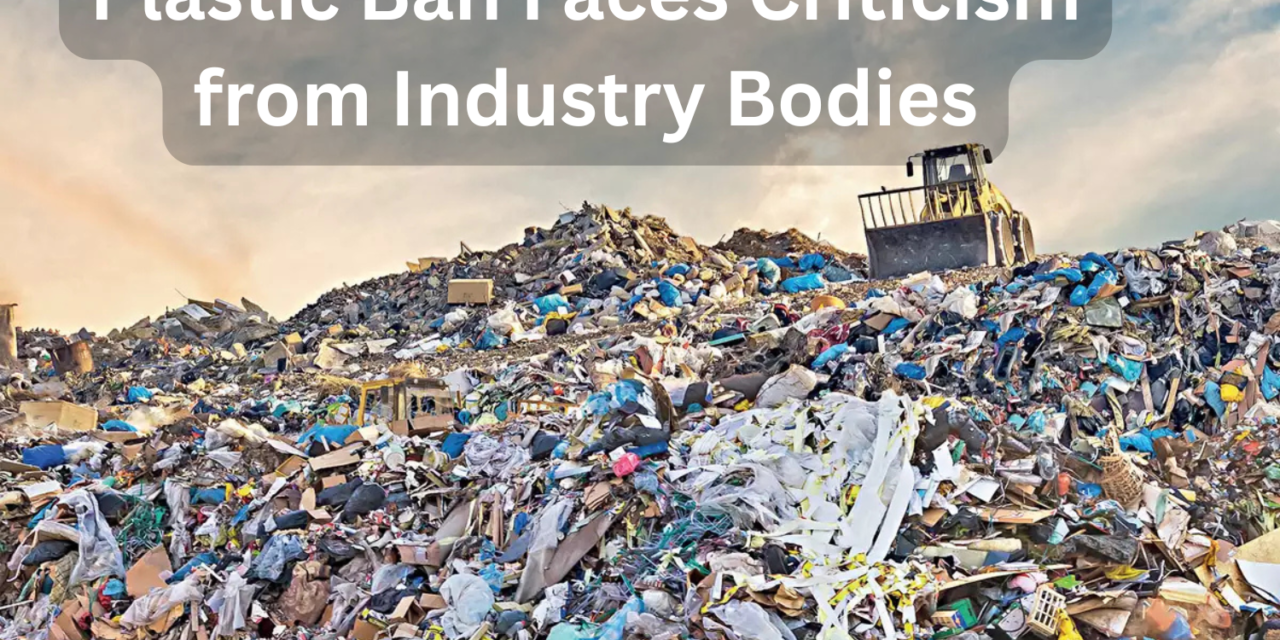
The Tamil Nadu government’s ban on single-use plastic products, aimed at reducing environmental pollution, has come under sharp criticism from industry bodies and small-scale manufacturers. While the policy has been lauded for its environmental goals, businesses argue that the lack of viable alternatives and support mechanisms has led to significant operational challenges.
Industry representatives have expressed concerns over the economic impact of the ban, particularly on micro, small, and medium enterprises (MSMEs), which constitute a major segment of the state’s plastic manufacturing sector. Many manufacturers claim that the ban has resulted in job losses and reduced revenue due to insufficient time for transition and a lack of affordable alternative materials.
“We support the move toward sustainability, but the government must ensure the availability of alternatives and provide financial assistance to small units for upgrading technologies,” said an official from a leading industry association.
The industry has called for greater clarity on regulations, along with incentives for adopting eco-friendly practices, such as subsidies for biodegradable material production and support for research into alternative solutions.
While the government continues to enforce the ban, it faces the dual challenge of balancing environmental sustainability with industrial growth, a critical issue for a state heavily reliant on its manufacturing sector.