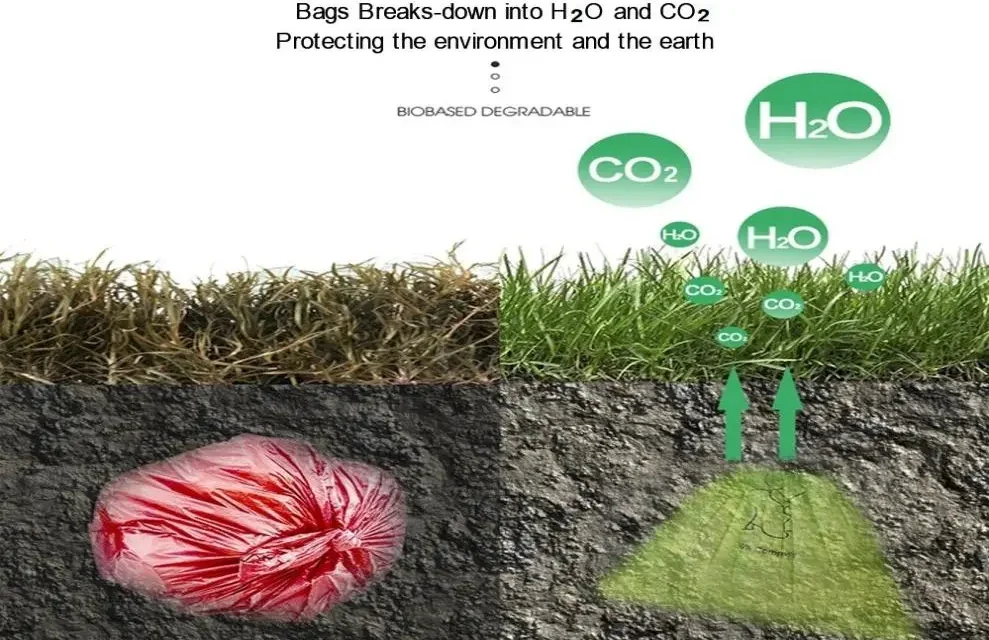
Biodegradable and compostable plastic bags play an important role in reducing the environmental impact of traditional plastic bags by offering more sustainable alternatives that decompose more quickly and break down into non-toxic components. These types of bags are designed to mitigate the long-term pollution caused by conventional petroleum-based plastics, which can take hundreds of years to decompose. Here’s how biodegradable and compostable bags contribute to reducing the environmental footprint:
1. Faster Decomposition
- Biodegradable plastic bags are made from materials that can break down in the environment, typically over a period of months to years depending on conditions such as temperature, moisture, and the presence of microorganisms.
- Compostable plastic bags, which are a subset of biodegradable plastics, break down more rapidly and turn into organic matter (compost) when exposed to specific composting conditions, such as those found in industrial composting facilities. This results in a much shorter decomposition time, often within 12 weeks.
Environmental Impact:
- By breaking down more quickly, these bags reduce the long-term presence of plastic waste in the environment. Unlike traditional plastic bags that can persist for centuries, biodegradable and compostable bags leave less lasting impact on ecosystems, wildlife, and landscapes.
- Microplastic pollution is also minimized since biodegradable plastics break down into non-toxic components, preventing the generation of microplastics that are hazardous to both the environment and living organisms.
2. Reduction of Plastic Waste in Landfills
- Landfills are one of the primary disposal sites for plastic waste. Since traditional plastics take hundreds of years to break down in landfills, they occupy space for long periods, releasing greenhouse gases like methane during their slow decomposition.
- Biodegradable and compostable bags are designed to break down more quickly in landfills (if properly managed), reducing the volume of waste and potentially decreasing the long-term environmental footprint associated with plastic bag waste.
Environmental Impact:
- Compostable bags decompose into natural elements, turning into organic material without leaving harmful residues in landfills. This contributes to a reduction in waste accumulation and may reduce landfill burden.
- If these bags end up in landfills that are equipped with controlled composting conditions, they will decompose into compost instead of remaining as waste.
3. Less Harmful to Wildlife
- Wildlife, particularly marine animals, are often at risk of ingesting or becoming entangled in plastic bags, which can lead to starvation, internal injuries, or death. Traditional plastics do not break down quickly and persist in ecosystems, continuing to harm wildlife over time.
- Biodegradable and compostable bags are designed to break down faster, reducing the risk of entanglement or ingestion by animals. While biodegradable bags still require responsible disposal, they generally present a lower risk to animals compared to conventional plastics.
Environmental Impact:
- Biodegradable bags break down into harmless compounds that do not persist in the environment, reducing the chances of harming marine life or terrestrial animals that might ingest or become trapped in plastic bags.
- Compostable bags, especially those made from plant-based materials like PLA (Polylactic Acid) or PHA (Polyhydroxyalkanoates), are typically considered safer for wildlife because they are often made from renewable resources that compost into organic matter.
4. Reduced Carbon Footprint in Production
- Biodegradable plastics are typically made from renewable resources such as corn starch, sugarcane, or cassava, as opposed to conventional plastics made from petroleum. The production of biodegradable plastics generally results in a lower carbon footprint because it uses less fossil fuel and has a reduced environmental impact during extraction and processing.
- The production of compostable bags from plant-based materials can also be carbon-neutral or even carbon-negative, depending on the agricultural practices used to produce the raw materials (e.g., using sustainable farming methods that sequester carbon in the soil).
Environmental Impact:
- Using renewable plant-based feedstocks for biodegradable and compostable bags can significantly reduce greenhouse gas emissions compared to the energy-intensive production of traditional plastic bags made from fossil fuels.
- As an added benefit, some biodegradable bags may also help sequester carbon in the soil, making the production of these bags a greener alternative in terms of overall environmental impact.
5. Reduction in Petroleum Use
- Biodegradable plastic bags made from renewable sources help reduce reliance on petroleum-based plastics, which are derived from non-renewable fossil fuels.
- The shift to bioplastics for single-use bags decreases the demand for petroleum and fosters the development of alternative, more sustainable materials.
Environmental Impact:
- Reducing reliance on petroleum for plastic bag production decreases dependence on fossil fuels, reducing the overall carbon footprint of plastic production.
- It also promotes the use of sustainable materials like starch, sugarcane, and corn, which are renewable and have a lower environmental impact compared to conventional plastics.
6. Supporting Circular Economy and Composting Systems
- Compostable bags are designed to break down into organic material when exposed to industrial composting conditions. This supports the circular economy, where products are designed for reuse, recycling, and composting, reducing the need for virgin materials and minimizing waste.
- Compostable bags that are collected and processed in composting facilities can contribute to soil health by returning valuable organic matter to the earth, enriching soil and supporting agricultural systems.
Environmental Impact:
- Compostable plastic bags can be a part of the closed-loop systems where waste is diverted from landfills and instead returned to the environment as useful compost.
- This helps in creating a circular flow of resources, where materials are continuously cycled and reused, contributing to sustainable waste management.